
A container workshop (or garage) is a tough, secure space that is quick to install and easy to customise. Whether you want a space for tools, a car, a hobby or a small business, container conversions are a practical alternative to a built structure.
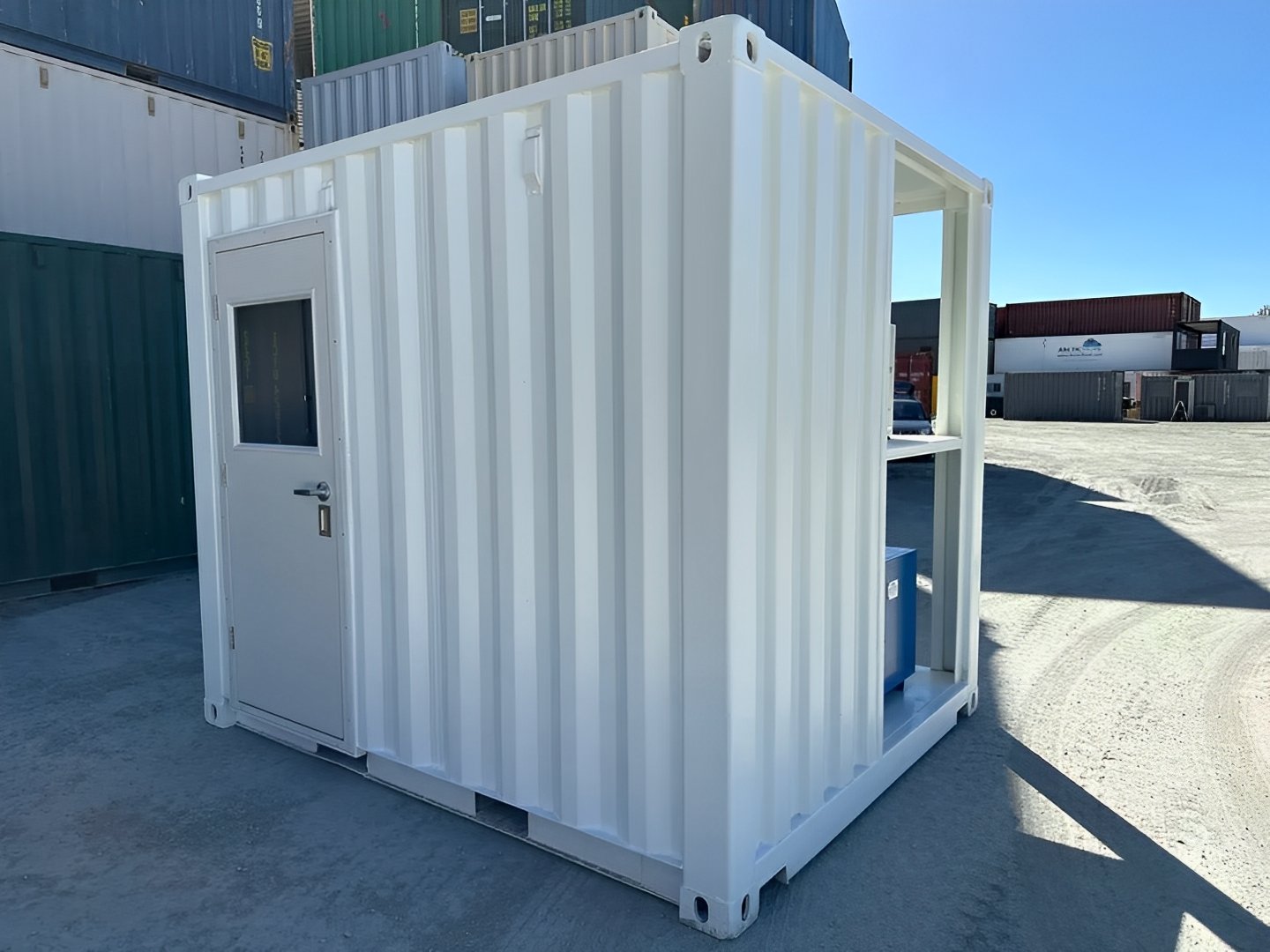
Why convert a container into a workshop or garage?
- Strength: a steel shell protects tools and vehicles from theft and weather.
- Speed: conversions are often completed off-site and delivered ready to use.
- Customisation: doors, windows, shelving and power can be added to suit your work.
- Relocation: the unit can be moved if you change premises.
Choosing the right size
A 20ft container suits a workshop or a small car, while a 40ft gives room for larger vehicles or multiple work areas. See the container sizes guide for internal dimensions. If you want a finished option, take a look at our shipping container workshop.
Key features for a garage or workshop
- Doors: roll-up or double doors for vehicle and equipment access.
- Insulation and lining: to control temperature and condensation.
- Electrics: sockets, lighting and, if needed, three-phase power installed by a qualified electrician.
- Ventilation: essential if you use paints, solvents or machinery.
- Flooring: a durable, non-slip surface that can handle weight.
For layout ideas and cut-outs, see our container modifications guide.
Planning permission and regulations
Using a container as a garage or workshop can still need planning permission, particularly if it is permanent, visible from the road or used for business. Check with your local authority first. Our planning permission guide explains the main points.
Maintenance
A coated steel container lasts for decades with basic care. Keep the roof clear, check door seals and treat any surface rust early. See container maintenance tips.
Power, lighting and ventilation for a container workshop
A container workshop needs the same basics as any other workspace: safe power, good lighting and fresh air. Have the electrics installed and tested by a qualified electrician, with a protected consumer unit and enough sockets for your tools. LED strip lighting along the ceiling gives even light, and a window or glazed door adds daylight. For woodworking, welding or vehicle work, plan extraction and ventilation early, because steel walls trap dust, fumes and moisture. Keep a fire extinguisher and a first aid kit close to the door.
Insulation matters too. Lining the walls and roof reduces condensation and keeps the space usable in winter and summer, and a level, damp-proof base protects the floor. Check whether your project needs permission: the Planning Portal explains permitted development and when building regulations apply, and your local authority can confirm the rules for your address.
Finally, consider security and access. Heavy-duty locks, a lockbox and a well-lit position deter theft, while a wide opening or roller shutter makes it easier to move tools and vehicles in and out. If you plan to store a vehicle, check the internal height and door width first. Asking suppliers exactly what is included, from delivery to fit-out, makes quotes easier to compare.
Frequently asked questions
Can I use a shipping container as a garage?
Yes. With suitable doors and a proper base, a container can store vehicles securely. Check planning rules for your site.
How big a container do I need for a car?
A 20ft container fits many cars, while a 40ft offers more room for larger vehicles or a workspace beside them.
Do I need insulation in a workshop container?
Yes, in most cases. Insulation limits condensation and keeps the space usable in all seasons.
Can I run power to a container workshop?
Yes, but it should be installed and certified by a qualified electrician.
Start your container workshop
View our container workshop or talk to us about a bespoke conversion.