
Refrigerated shipping containers, also called reefers, keep goods cold or frozen in a controlled environment. They are widely used for food, drink, pharmaceuticals and events. This guide explains how reefers work, what to check before buying and how to use one on land.
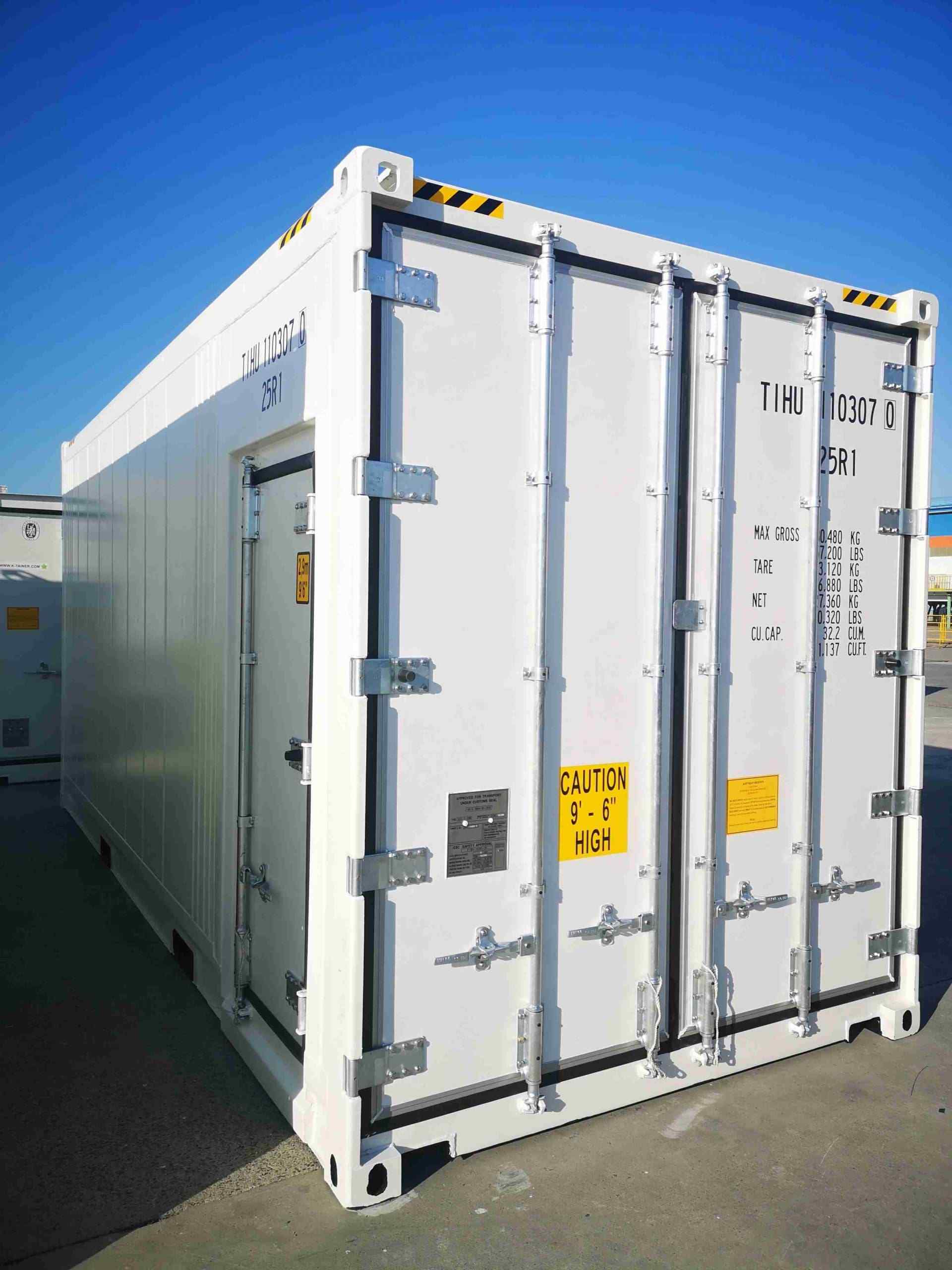
What is a reefer container?
A reefer is an insulated shipping container fitted with a refrigeration unit that controls the temperature inside. Many units can hold chilled or frozen temperatures, depending on the model and settings.
Common uses
- Cold storage for food and drink businesses.
- Event and catering overflow storage.
- Farm and produce storage.
- Pharmaceutical and specialist temperature-controlled goods.
- Mobile cold rooms for pop-ups and markets.
Sizes available
Reefers come in several lengths, including compact options. See the used 10ft refrigerated container for smaller sites and browse our refrigerated containers range for other sizes. For general dimensions, read the sizes guide.
Power requirements
A refrigeration unit needs a suitable electricity supply, commonly a three-phase connection or a high-capacity single-phase supply depending on the model. Always confirm the power requirements with the seller and have the connection installed by a qualified electrician.
What to check on a used reefer
- Condition of the container body, floor and door seals.
- Refrigeration unit operation and temperature range.
- Service history and any available test or maintenance records.
- Cleanliness and suitability for food use.
Understanding condition grades helps: see container grades explained and our new vs used guide.
Delivery and siting
Place your reefer on level ground with enough clearance for airflow around the cooling unit. Our delivery guide covers access and offloading.
Buying a refrigerated shipping container: key checks
Before you buy a refrigerated shipping container, work out what you will store and how cold it needs to be. Chilled food, frozen goods and temperature-sensitive products all have different requirements, so the unit’s temperature range, condition and service history should match the job. Ask to see the unit running, and check that the cooling unit holds its set temperature. A written specification from the supplier avoids surprises on delivery day.
If the container will hold food, the Food Standards Agency (food.gov.uk) provides guidance on food safety and hygiene for businesses. Think about cleaning, temperature logging and where the unit will stand, because a reefer used for food storage should be kept clean and monitored.
Plan your power supply early. Refrigeration units normally need a dedicated electrical connection, and some require three-phase power, so ask the supplier which supply the unit needs and have the connection made by a qualified electrician. Position the reefer on firm, level ground with space around the cooling unit for airflow, and check the delivery route for the lorry.
Used reefers can be a cost-effective choice, but condition varies. Check the floor, the door seals and the refrigeration unit’s service records, and ask when the unit was last tested. New or one-trip units cost more but often come with a clearer history and warranty terms, which can matter if the container will be in daily use.
Finally, compare what is included in each quote, such as delivery, offloading, a power lead and any warranty, so you can compare like for like.
Frequently asked questions
What temperature can a reefer container hold?
It depends on the model, but many can hold chilled and frozen temperatures. Confirm the range with the seller.
Does a reefer need electricity?
Yes. The refrigeration unit needs a suitable power supply, which should be installed by a qualified electrician.
Can I buy a used refrigerated container?
Yes. Used reefers are cost-effective, but check the unit condition and service history.
Are reefers suitable for food storage?
They can be, provided the interior is clean and meets any food hygiene requirements for your business.
Find a refrigerated container
Browse our refrigerated containers or contact us to discuss your cold storage needs.