
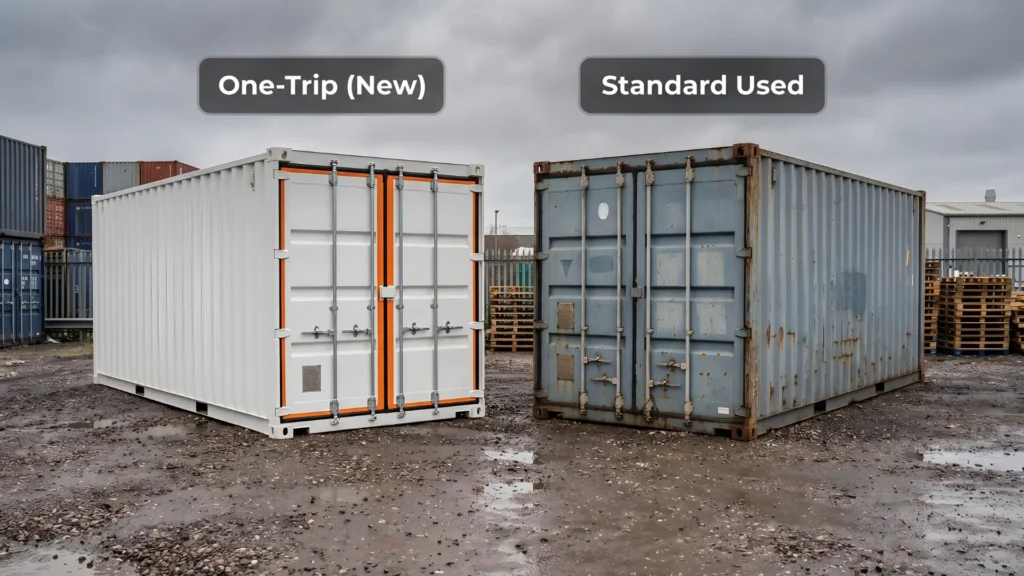
Choosing between new vs used shipping containers UK wide comes down to more than budget — it depends on what the container will actually be used for, how long you need it, and whether you’re planning to convert it. Below are the 5 key differences that should drive your decision, plus a straight comparison table so you can decide in minutes, not hours.
Table of Contents
- New, one-trip, and used: what the terms mean
- New vs used shipping containers UK: 5 key differences
- Side-by-side comparison
- Our recommendation
- FAQs
<a name=”terms”></a>
1. New, one-trip, and used: what the terms mean
Before comparing new vs used shipping containers UK options, it helps to know exactly what each grade means:
- New containers are freshly manufactured and have never shipped cargo. Genuinely brand-new stock is relatively rare in the UK secondary market.
- One-trip containers have completed a single overseas voyage (often from a manufacturing hub like China) before being sold on. They may carry very minor cosmetic marks but are structurally as good as new — this is what most UK buyers actually mean when they ask for “a new container.”
- Used containers have completed multiple shipping cycles over several years and are graded (roughly A, B, or C) by cosmetic and structural condition. A well-graded used container remains fully wind- and watertight.
Every container, new or used, should also carry a valid CSC safety approval plate confirming it meets the international ISO 6346 identification and safety standard — worth checking on any container before you buy, particularly used stock. Compare live options: used 20ft containers and new 8ft containers.
<a name=”differences”></a>
2. New vs used shipping containers UK: 5 key differences
1. Price
This is the most obvious difference in the new vs used shipping containers UK decision — used stock typically costs 20–35% less than an equivalent one-trip unit, since you’re not paying for near-pristine condition.
2. Cosmetic condition
New and one-trip containers arrive with minimal marks. Used containers show their history — surface rust, dents, and old shipping-line branding — which matters if the container will be visible or customer-facing.
3. Structural lifespan
A one-trip container will typically outlast a used one by several years before it needs repainting or rust treatment, an important factor if you’re planning to keep the container for a decade or more.
4. Suitability for conversion
If you’re cutting into the steel for windows, doors, or services, starting with a structurally clean one-trip shell saves money on prep work and produces a better finished result. See our container homes and offices range for conversion-ready stock.
5. Availability by size and spec
Used stock in popular sizes (standard 20ft) is widely available, but Grade A used high cube containers have become harder to source as demand for conversions rises — check our high cube containers page for current availability.
<a name=”comparison”></a>
3. Side-by-side comparison
| Factor | New / One-Trip | Used |
|---|---|---|
| Cosmetic condition | Minimal marks | Visible wear, rust, dents |
| Structural integrity | Excellent | Good, if properly graded |
| Price | Higher | Lower |
| Best for | Conversions, offices, homes, pools | Storage, short-term use, budget projects |
| Lifespan before maintenance | 15–20+ years | 5–10 years, grade-dependent |
<a name=”recommendation”></a>
4. Our recommendation
When weighing new vs used shipping containers UK options, work backwards from the end use: will anyone see it, will you be cutting into it, and how long do you need it for? Storage-only and short-term projects almost always point to used. Conversions, offices, and long-term projects almost always justify paying for one-trip stock. See full current pricing on the shop page, or read our full shipping container cost guide for exact 2026 price ranges by size.
<a name=”faq”></a>
5. Frequently asked questions
Is a used shipping container as strong as a new one? A well-graded used container that’s wind and watertight is just as structurally sound for most purposes — the difference is mainly cosmetic and in remaining lifespan before maintenance is needed.
What does “one-trip” mean when comparing new vs used shipping containers UK? One-trip means the container has made a single overseas shipping journey before being sold, so it’s structurally new but may carry very minor cosmetic marks from that one voyage.
Which is better for a container home conversion, new or used? New or one-trip is strongly recommended for conversions, since you’re cutting into the steel and a structurally clean shell reduces both prep costs and long-term maintenance.