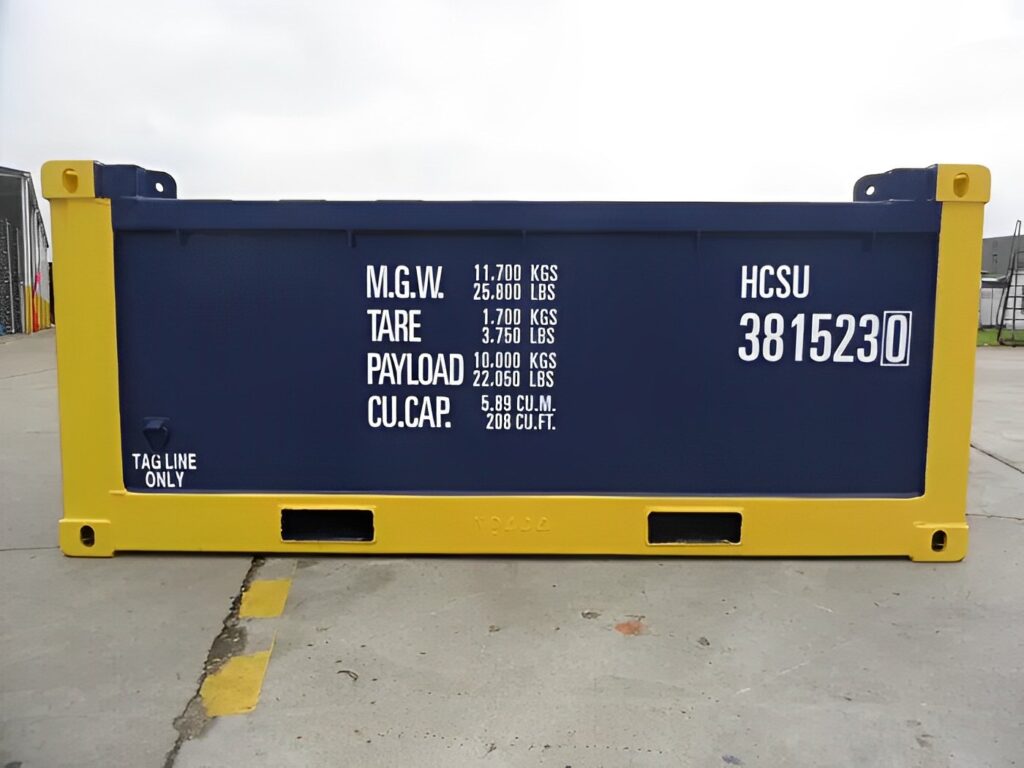
If you’ve been quoted for a DNV offshore container UK project and seen “DNV 2.7-1 certified” in the spec, it’s worth understanding exactly what that certification covers before you buy — it’s not a general quality mark, it’s a specific engineering standard tied to one thing: safe lifting at sea.
Table of Contents
- What DNV 2.7-1 certification actually tests
- Why it matters for offshore work
- DNV offshore container UK options
- FAQs
<a name=”what-it-tests”></a>
1. What DNV 2.7-1 certification actually tests
DNV 2.7-1 is the Standard for Certification issued by DNV (Det Norske Veritas), covering the structural design, manufacture, testing, and marking requirements for offshore containers. In practical terms, a DNV offshore container UK unit certified to this standard has been engineered and tested specifically to withstand being lifted by crane between vessels, platforms, and fixed installations in open sea conditions — a fundamentally different stress load than a standard container ever experiences on land.
<a name=”why-it-matters”></a>
2. Why it matters for offshore work
A standard shipping container, however strong it looks, is not engineered or certified for repeated crane lifting in offshore conditions, and using an uncertified unit for this purpose is both a safety risk and, in most offshore operating environments, a compliance failure. DNV 2.7-1 certification specifically addresses lifting point strength, structural integrity under dynamic sea-state loads, and traceable material and testing standards — details that matter enormously when a container is suspended over open water or a working platform. You can review the certification standard directly on DNV’s official standards page if you want the full technical requirements.
<a name=”options”></a>
3. DNV offshore container UK options
Offshore-certified units are typically supplied in compact 10ft configurations, suited to the crane and deck-space constraints common on platforms and support vessels. See our 10ft DNV 2.7-1 offshore container and 10ft DNV open top container for current stock.
<a name=”faq”></a>
DNV offshore container UK: what to ask your supplier
When you source a DNV offshore container UK operators can rely on, ask for the certificate and the unit’s inspection history before you commit. Check that the data plate is present and legible, that the lifting points and sling set match the certificate, and that the date of the last periodic inspection is current. Offshore containers are subject to regular examination, so make sure you understand when the next inspection is due and who will carry it out.
For general offshore safety information, the HSE offshore guidance is a useful starting point. Ask your supplier whether the container is new or reconditioned, what cargo it is designed for, and how it will be delivered, because transport and lifting arrangements can differ from a standard storage container.
Comparing certified units like for like means looking at size, rated gross weight, certification and delivery together, not just the headline price.
4. Frequently asked questions
Is every shipping container suitable for offshore lifting? No — standard shipping containers are not certified or engineered for offshore crane lifting. Only units specifically tested and certified to a standard like DNV 2.7-1 should be used for this purpose.
How long does DNV 2.7-1 certification last on a container? Certified containers require periodic inspection to remain compliant, rather than being certified indefinitely at the point of manufacture — check the specific inspection interval with your supplier or certifying body.
Is DNV 2.7-1 the only offshore container certification? It’s one of the most widely recognized standards globally, but other certifying bodies and related standards (such as API 2CCU) also exist — always confirm which certification your specific project or operator requires.
Related guides and products
Keep reading:
- Container grades explained
- Shipping container sizes and dimensions
- Container modifications and custom builds
Shop the range: