
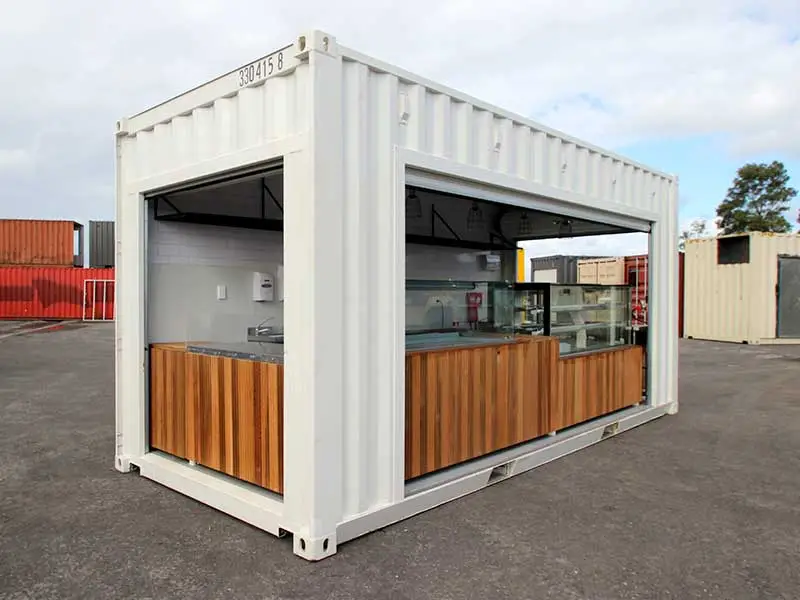
A shipping container cafe UK wide has become one of the most popular ways to launch a food or drinks business without the cost and delay of a traditional lease and fit-out. Below are the 6 real steps involved, from choosing the right container to opening day, plus what each stage typically costs and requires.
Table of Contents
- Why a shipping container cafe UK setup works
- Step 1–6: launching your container cafe
- Choosing the right container type
- Permits and food safety basics
- FAQs
<a name=”why”></a>
1. Why a shipping container cafe UK setup works
Compared to renting a traditional unit, a shipping container cafe UK business typically launches faster and for a fraction of the upfront cost, because most of the fit-out — counters, serving hatches, plumbing points, insulation — is done before delivery rather than on-site over weeks of building work. This is why container units have become the standard choice for coffee shops, street food bars, and pop-up kitchens across UK retail parks, festivals, and high streets.
<a name=”steps”></a>
2. Step 1–6: launching your shipping container cafe UK business
Step 1: Define your concept and size
A 10ft container suits a single-operator coffee kiosk; a 20ft unit gives room for a small team and a wider menu. Match the container to your actual service model before you spec anything else.
Step 2: Choose new or one-trip stock
Because a shipping container cafe UK build involves cutting serving hatches, extraction points, and plumbing runs into the steel, starting with a structurally clean one-trip container avoids costly rework later.
Step 3: Plan the internal layout
Work with your supplier to position the serving hatch, counter, and equipment for realistic workflow — this is far cheaper to get right at the fit-out stage than to change after delivery.
Step 4: Fit catering equipment and extraction
Coffee machines, fridges, and cooking equipment all need to be planned into the electrical and ventilation spec from the outset, particularly extraction if you’re cooking rather than just serving drinks.
Step 5: Arrange delivery and siting
Container delivery uses specialist HIAB vehicles, so confirm your site’s access and ground preparation (level hardstanding) before your delivery date.
Step 6: Sort permits before opening day
Food business registration, planning permission (if needed), and site-specific health and safety sign-off should all be confirmed before you commit to an opening date — see the permits section below.
<a name=”types”></a>
3. Choosing the right container type for your cafe
Browse ready-made options: our shipping container cafes range covers full sit-in style builds, while the 10ft pop-up container coffee shop and 10ft pop-up container bar suit smaller, mobile-style operations. If you need a proper working kitchen behind the counter, our shipping container kitchens are built with the extraction and prep space that requires, and the 10ft catering container kiosk is a compact option for simpler service.
<a name=”permits”></a>
4. Permits and food safety basics
Any UK food business — container-based or otherwise — must register with the local council at least 28 days before trading, under UK food hygiene law. You’ll also need a food hygiene rating inspection once trading begins. If the container is sited on land you don’t already have permission to trade from, check with your local planning authority — the Planning Portal’s guidance on business use is a useful starting reference, though container-specific commercial siting should always be confirmed directly with your local council.
<a name=”faq”></a>
5. Frequently asked questions
How much does a shipping container cafe UK build cost? This varies widely by size and fit-out level, but container cafes are typically significantly cheaper to launch than an equivalent traditional unit, since most of the build cost is fixed and predictable before delivery.
Do I need planning permission for a shipping container cafe UK site? It depends on the site and how long the container will be in place — always confirm with your local planning authority before committing to a location.
Can a shipping container cafe UK unit be moved to a new location later? Yes — this is one of the main advantages over a traditional lease. A container cafe can be relocated if your business needs change, unlike a fixed-lease unit.