Getting site welfare units UK compliance right isn’t optional — under the Construction (Design and Management) Regulations 2015 (CDM 2015), every construction site must provide adequate welfare facilities before work starts, and failure to do so can halt a project or trigger enforcement action. Here are the 5 legal requirements you need to know, plus how to choose the right unit for your site.
Table of Contents
- What counts as site welfare units UK law requires
- The 5 core welfare requirements
- Choosing the right unit for your site
- FAQs
<a name=”requirements”></a>
1. What counts as site welfare units UK law requires
Under CDM 2015, site welfare units UK-wide must be in place before any construction work begins, not arranged as an afterthought. The regulations set out specific minimums for toilets, washing facilities, rest areas, and drinking water — and these apply regardless of site size or expected duration.
<a name=”five”></a>
2. The 5 core welfare requirements
1. Toilets
Sufficient toilet provision is required based on the maximum number of people on site at any one time, with separate facilities where practical. Our double mains toilet block and single mains toilet cabin options cover sites of different sizes.
2. Washing facilities
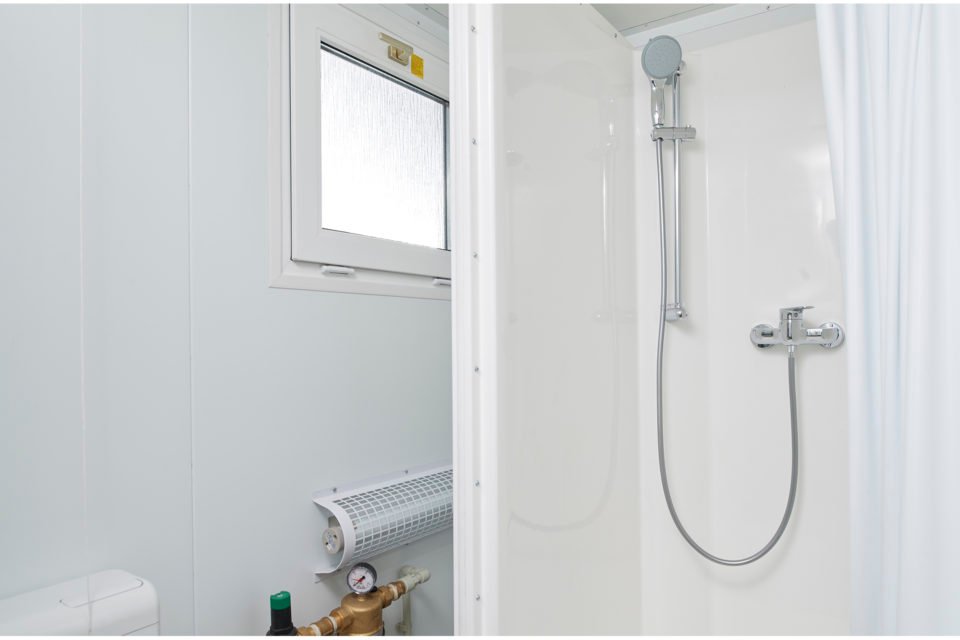
Washing facilities with hot and cold running water, soap, and towels (or dryers) must be provided near toilets and rest areas — our mains toilet and shower block combines both in one unit.
3. Drinking water
An adequate supply of clean drinking water must be available on-site, clearly marked separately from any non-potable supply.
4. Rest facilities
Workers need a space to rest, eat, and shelter from bad weather, away from work areas — typically provided via a site cabin or canteen unit.
5. First aid provision
Every site needs a designated, equipped first aid point sized to the workforce and risk level — see our first aid room container for a ready-fitted option.
<a name=”choosing”></a>
3. Choosing the right welfare unit for your site
For sites without a mains connection, a jackleg toilet cabin is often the practical choice, since it’s self-contained and can be sited without groundworks — see our 12ft x 9ft jackleg toilet cabin. Where mains services are available, a mains-connected block is generally more cost-effective for longer projects. For larger sites needing a bigger footprint, our 20ft steel toilet block provides multiple cubicles in one unit. Whichever route you choose, match unit size to your maximum on-site headcount, not your average headcount, since welfare provision is assessed against peak occupancy.
<a name=”faq”></a>
4. Frequently asked questions
Are site welfare units UK law-required for small sites too? Yes — CDM 2015 welfare requirements apply regardless of site size or project duration, including short-term and single-contractor jobs.
Who is responsible for providing site welfare units UK regulations require? The principal contractor is generally responsible for ensuring adequate welfare facilities are in place before work starts, though duties can be shared depending on the project structure.
Can site welfare units UK requirements be met without a mains connection? Yes — self-contained jackleg units with their own water and waste tanks are a standard solution for sites without mains services.